
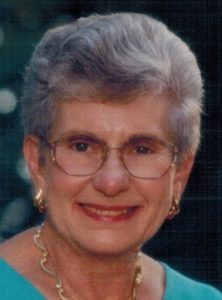
Of Auburndale, formerly of Boca Raton, FL., and New York, on August 7th, 2020. Beloved wife of the late Paul Singer. Devoted mother of Carol Singer Bricklin and her husband Daniel Bricklin of Newton and Gary Singer and his wife Susan Olshansky Singer of New Canaan, CT. Loving sister of the late Rosalind Blankenheimer. Dear grandmother of Rachel Bricklin and her husband Matthew Duane, Adina Bricklin and her husband Alexander Keift, Jessica Singer and Hannah Singer. Great Grandmother (Gigi) to Nora and Bryce Duane and Theia. The funeral was a private ceremony on Zoom held on Sunday afternoon, August 9th and the internment was held at the Polonnoe Cemetery, 776 Baker Street West Roxbury, MA. Remembrances may be made to the Friends of Tanglewood, Symphony Hall, 301 Massachusetts Avenue, Boston, MA 02115 or Susan G. Komen, 13770 Noel Road, Suite 81889, Dallas, TX 75380. www.brezniakfd.com.

Dr. Rose began his investigations when the idea of autoimmune disease — that the body’s immune system can produce illnesses by attacking its own cells — was considered preposterous. Today, largely because of Dr. Rose’s early groundwork in the field, more than 80 autoimmune diseases have been identified, including Type 1 diabetes, multiple sclerosis and rheumatoid arthritis, affecting more than 20 million Americans, a disproportionate percentage of whom are women.
Witebsky, who studied the properties of different blood types, was interested in how antigens entered the body and triggered an immune response from naturally produced antibodies. It was how the body healed itself: Harmful viruses and other invasive organisms were identified and vanquished by the immune system.
Witebsky suggested that Dr. Rose study thyroglobulin, a protein found in the thyroid gland. Dr. Rose extracted the protein from various mammals, including humans, horses and pigs, treated it with a substance to induce an immune response, then injected it in laboratory rabbits. The rabbits produced antibodies to fight off the foreign protein, even though it was structurally similar to the rabbits’ own thyroglobulin. Next, Dr. Rose used thyroglobulin obtained from other rabbits and came up with the same results — the experimental rabbits produced an immune response to ward off thyroiditis, or inflammation of the thyroid gland.
To his surprise, he discovered that the rabbits produced antibodies to fight off the invading antigen, even though it was derived from their own bodies.
“Is it actually possible that an animal can respond to its own antigen?” Dr. Rose told the Johns Hopkins University Gazette in 2014, recalling his sense of wonder at the time.
“We finally realized that we had essentially induced an autoimmune disease experimentally,” Dr. Rose told the Gazette. “That changed the world.”
“At first, the immunologic world was suspicious of this whole business,” Dr. Rose said in a 2019 interview with Brigham Clinical & Research News. “To take one of the basic dogmas of immunology — horror autotoxicus — and turn it on its head, well . . . but eventually people bought into it.”
Noel Richard Rose was born Dec. 3, 1927, in Stamford, Conn. His mother was a teacher, his father a physician who served in the medical corps during World War II. He later developed a specialty in treating patients with rheumatic fever, now considered an autoimmune disease.
“I became enraptured with the idea that there is another world around us that we don’t see,” Dr. Rose told the Scientist earlier this year. “It was something that raised my curiosity from the beginning and has been the theme of most of my career.”
While working in the laboratory and teaching courses, Dr. Rose graduated from medical school in 1964 from what is now called the University at Buffalo, part of the State University of New York system.
“When I began, autoimmune disease was a field that was nonexistent,” he said in 2014. “People thought it was a crazy idea. As we, and others, began to publish more articles, the world began to change. Autoimmune diseases started popping up all over the place.”
He was a consultant to the World Health Organization, chaired the Autoimmune Diseases Coordinating Committee at the National Institutes of Health and was a fellow of the American Association for the Advancement of Science.
He spoke at scientific symposiums and on radio shows, taking calls from patients with autoimmune diseases, about 75 percent of whom are women.
“One of the problems with patients having autoimmune disease is that they have a natural tendency to go from doctor to doctor to doctor, because their disease is often complex,” Dr. Rose said on NPR in 2002. “It doesn’t fit neatly in a clinical specialty. So I think it’s much better to have one internist, one family doctor with whom you feel comfortable and then let him or her try to sort out what kinds of underlying problems you may have.”
Dr. Rose began his investigations when the idea of autoimmune disease — that the body’s immune system can produce illnesses by attacking its own cells — was considered preposterous. Today, largely because of Dr. Rose’s early groundwork in the field, more than 80 autoimmune diseases have been identified, including Type 1 diabetes, multiple sclerosis and rheumatoid arthritis, affecting more than 20 million Americans, a disproportionate percentage of whom are women.
“Add them up and the number of people with these diseases is very high,” Dr. Rose told The Washington Post in 1995. “Autoimmune diseases are one of the big three, meaning cancer, heart disease and autoimmune disease.”Beginning in 1951, Dr. Rose became a medical researcher and instructor at what was then the University of Buffalo, working in a laboratory led by immunologist Ernest Witebsky, who had fled Nazi Germany in the 1930s.
Witebsky, who studied the properties of different blood types, was interested in how antigens entered the body and triggered an immune response from naturally produced antibodies. It was how the body healed itself: Harmful viruses and other invasive organisms were identified and vanquished by the immune system.
Decades later in Witebksy’s laboratory in Buffalo, Dr. Rose became a third-generation scientific descendant of Ehrich, and the first to challenge his prevailing idea, which had hardened into doctrine.
Witebsky suggested that Dr. Rose study thyroglobulin, a protein found in the thyroid gland. Dr. Rose extracted the protein from various mammals, including humans, horses and pigs, treated it with a substance to induce an immune response, then injected it in laboratory rabbits. The rabbits produced antibodies to fight off the foreign protein, even though it was structurally similar to the rabbits’ own thyroglobulin.
Next, Dr. Rose used thyroglobulin obtained from other rabbits and came up with the same results — the experimental rabbits produced an immune response to ward off thyroiditis, or inflammation of the thyroid gland.
To his surprise, he discovered that the rabbits produced antibodies to fight off the invading antigen, even though it was derived from their own bodies.
“Is it actually possible that an animal can respond to its own antigen?” Dr. Rose told the Johns Hopkins University Gazette in 2014, recalling his sense of wonder at the time.
“We finally realized that we had essentially induced an autoimmune disease experimentally,” Dr. Rose told the Gazette. “That changed the world.”
“At first, the immunologic world was suspicious of this whole business,” Dr. Rose said in a 2019 interview with Brigham Clinical & Research News. “To take one of the basic dogmas of immunology — horror autotoxicus — and turn it on its head, well . . . but eventually people bought into it.”
Noel Richard Rose was born Dec. 3, 1927, in Stamford, Conn. His mother was a teacher, his father a physician who served in the medical corps during World War II. He later developed a specialty in treating patients with rheumatic fever, now considered an autoimmune disease.
While working in the laboratory and teaching courses, Dr. Rose graduated from medical school in 1964 from what is now called the University at Buffalo, part of the State University of New York system.
He was a consultant to the World Health Organization, chaired the Autoimmune Diseases Coordinating Committee at the National Institutes of Health and was a fellow of the American Association for the Advancement of Science.
He spoke at scientific symposiums and on radio shows, taking calls from patients with autoimmune diseases, about 75 percent of whom are women.
“One of the problems with patients having autoimmune disease is that they have a natural tendency to go from doctor to doctor to doctor, because their disease is often complex,” Dr. Rose said on NPR in 2002. “It doesn’t fit neatly in a clinical specialty. So I think it’s much better to have one internist, one family doctor with whom you feel comfortable and then let him or her try to sort out what kinds of underlying problems you may have.”
In 2015, Dr. Rose retired from Johns Hopkins and moved to Massachusetts, where he had a joint appointment to lecture at Harvard Medical School and work in the pathology department of Brigham and Women’s Hospital until his death.
Survivors include his wife of 69 years, Deborah Harber Rose of Brookline, Mass; four children, Alison Rose Weinstock of Weston, Mass.; David Rose of Waterloo, Ontario, Bethany Rose Kramer of Framingham, Mass.; and Jonathan Rose of Romeo, Mich.; 10 grandchildren; and five great-grandchildren.
Dr. Rose was considered an engaging teacher. Throughout his career, he helped evaluate medical school curriculums and worked with other academic departments to improve the classroom skills of scientists and other professors.


